

Henri B. Kagan, Engineering Graduate of Chimie ParisTech – PSL (Class of 1954), Awarded the 2026 Nobel Prize in Chemistry
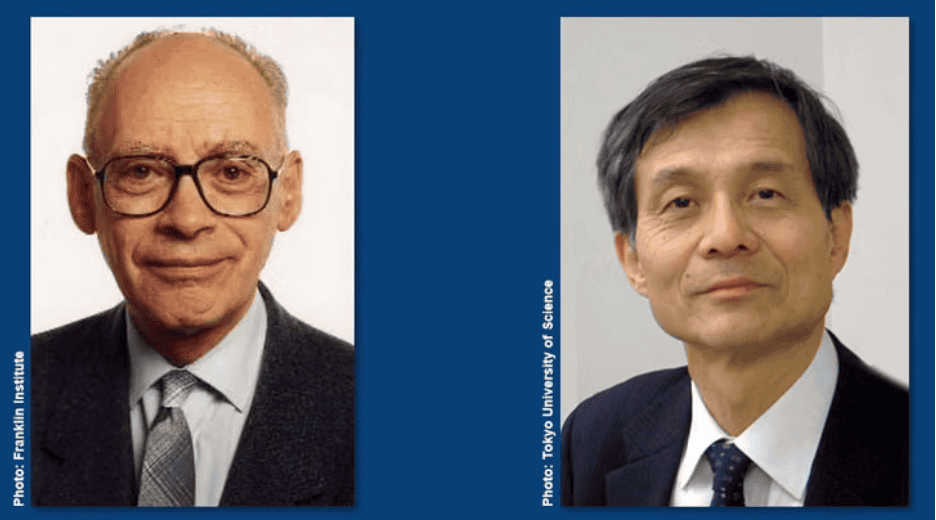
The 2026 Nobel Prize in Chemistry was awarded on October 7 to Henri B. Kagan and Kenso Soai for their “discovery of nonlinear effects and autocatalysis in asymmetric organic synthesis.” A graduate of Chimie ParisTech – PSL (Class of 1954), Henri B. Kagan is one of the leading figures in modern chemistry. This distinction honors pioneering work that has profoundly advanced our understanding of molecular asymmetry, contributed to fundamental research, and found numerous applications in the pharmaceutical industry. For the entire School community, this announcement is a particularly significant moment.
A Chimie ParisTech – PSL Alumnus Honored with the Nobel Prize in Chemistry. The awarding of the 2026 Nobel Prize in Chemistry to Henri B. Kagan and Kenso Soai recognizes two scientists whose discoveries opened new perspectives in the understanding of the mechanisms underlying asymmetric organic synthesis. The Nobel Committee chose to honor their work for the “discovery of nonlinear effects and autocatalysis in asymmetric organic synthesis.”
After studying at the Faculty of Sciences of Paris and Chimie ParisTech – PSL, Henri B. Kagan completed his doctoral research under the supervision of Jean Jacques at the Collège de France. In 1967, he established his research group at the Faculty of Sciences of Orsay, where he conducted most of his scientific career. Now Professor Emeritus, he remains a leading reference in organic chemistry. A member of the French Academy of Sciences and recipient of numerous international awards, Henri B. Kagan has helped shape research fields that continue to underpin a significant part of modern chemistry.
Foundational Discoveries for Contemporary Chemistry. Henri B. Kagan is widely regarded as one of the global pioneers of asymmetric catalysis. His work profoundly transformed the way chemists understand and control the formation of molecules with specific symmetry properties. Among his major contributions is the discovery, in 1971, of the DIOP ligand, which played a decisive role in the development of enantioselective catalysis. This breakthrough paved the way for numerous applications in organic synthesis. In 1986, he reported the first examples of nonlinear effects in asymmetric catalysis, demonstrating that selectivity could be amplified far beyond what had previously been considered possible. These findings, complemented by the development of mathematical models describing the underlying mechanisms, gave rise to an entirely new field of research.
The 2026 Nobel Prize also recognizes the significance of these discoveries in understanding fundamental phenomena associated with the emergence of biological homochirality. The work of Henri B. Kagan and Kenso Soai provided key insights into how a preference for a single molecular orientation can arise and be amplified during a chemical reaction.
“Their discoveries have been instrumental for chemists designing reactions used in the manufacture of pharmaceutical products,” the Nobel Committee stated in its announcement.
Henri B. Kagan’s research has also left a lasting mark on modern organic chemistry through his work on lanthanides and the development of samarium iodide (SmI₂) synthesis under mild conditions, a discovery that has become an important synthetic tool.
A Source of Inspiration for the Entire Community. Beyond the individual recognition it represents, this Nobel Prize highlights the importance of scientific education, fundamental research, and the transmission of knowledge. For the students of Chimie ParisTech – PSL, Henri B. Kagan’s career demonstrates how a strong scientific education can lead to discoveries that permanently transform a field of research. For doctoral candidates, researchers, and faculty members, it illustrates the long-term impact of a sustained commitment to advancing knowledge. This distinction also underscores the profound influence chemistry can have on society. The concepts developed by Henri B. Kagan have found applications in numerous processes used by the pharmaceutical industry and continue to inspire the design of new molecules and innovative synthetic strategies.
The entire Chimie ParisTech – PSL community extends its warmest congratulations to Henri B. Kagan. His career, scientific rigor, and the international impact of his work are a source of inspiration for all those who contribute to the School today and for the generations who will advance chemistry and science in the years to come.