
130 years of history
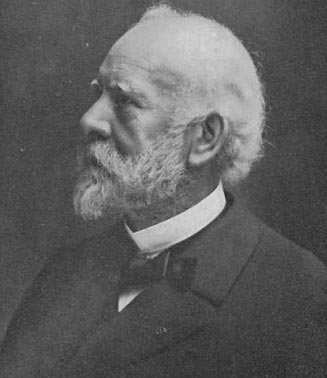
Creation of the École Nationale Supérieure de Chimie of Paris by Charles Friedel, holder of the Chair of Organic Chemistry at the Sorbonne, as “a laboratory for practical and industrial chemistry for the Paris Faculty of Sciences”. The April 29, 1896 ministerial decree for the creation was signed by the Minister of Public Instruction, Emile Combes. Charles Friedel became its first Director and the University put temporary barracks at his disposal at No. 3, rue Michelet, near Avenue de l’Observatoire. The laboratory began its first class at the beginning of the academic year on November 3, 1896.
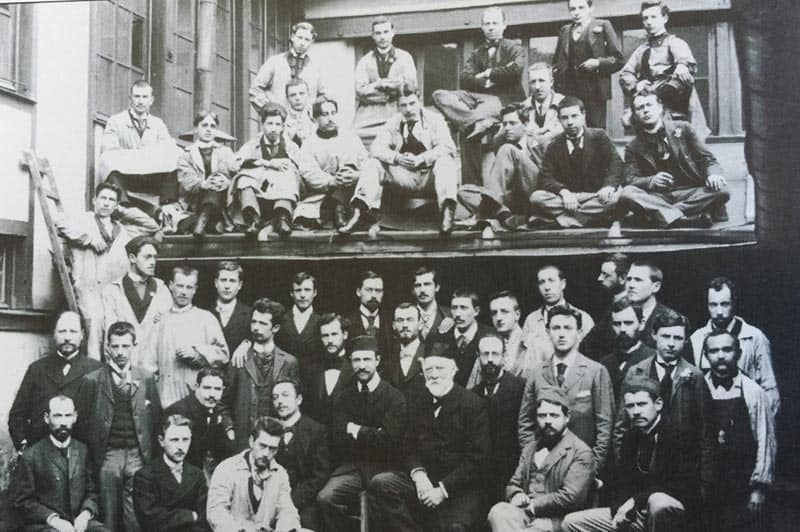
Creation of the Alumni Association of the Institute of Applied Chemistry
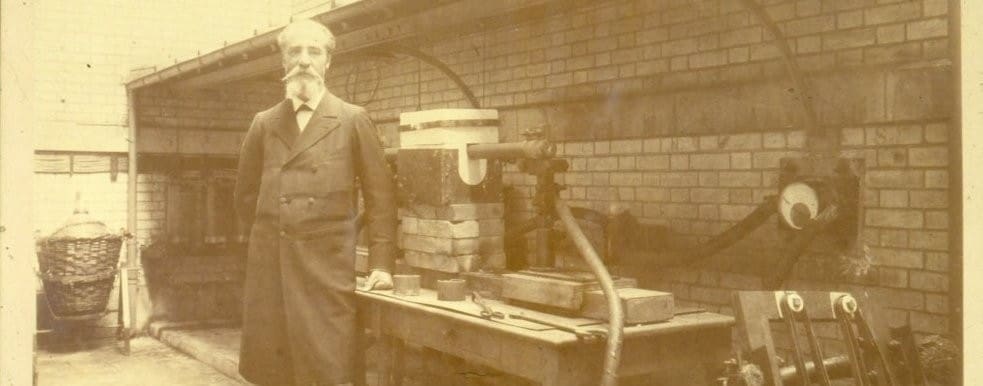
Henri Moissan is appointed Director upon Charles Friedel’s death. He changes the name of the institution to The Institute of Applied Chemistry.
On March 17, 1906, Henri Moissan secured an agreement, through a law, between the State, the University of Paris and the City of Paris for the construction of a “Chemical Institute”.
The December 29, 1906 Decree stipulates that the diploma awarded by the Institute is that of graduate chemical engineer from the Faculty of Sciences of the University of Paris. In November 1906, Henri Moissan became the first French recipient of the Nobel Prize in Chemistry. He had indeed isolated fluorine twenty years earlier, in 1886, during a well-known experiment, which subsequently enabled syntheses at very high temperatures.
Camille Chabrié is appointed Director of the Chemical Institute.
The construction of the current building, which is intended to host the Institute, starts at Pierre Curie street. Construction is interrupted in 1914, and finally completed in 1920.
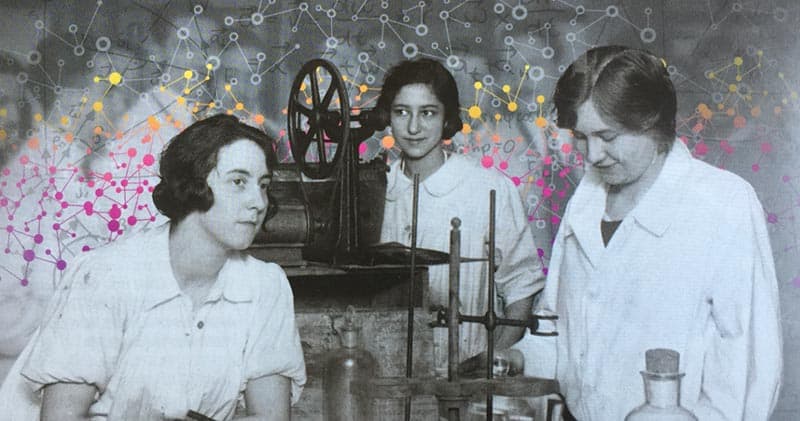
After 2 years of closure, the Institute reopens its doors. Thanks to Camille Chabrié, girls are now allowed to take the entrance examination. Mss. Cottereau and Mss. Force join the school and graduate in 1919.
Inauguration of the school.
In February 1920, 80 first-year students take up residence at Pierre and Marie Curie street. The Institute’s buildings were completed only in 1923-1924.
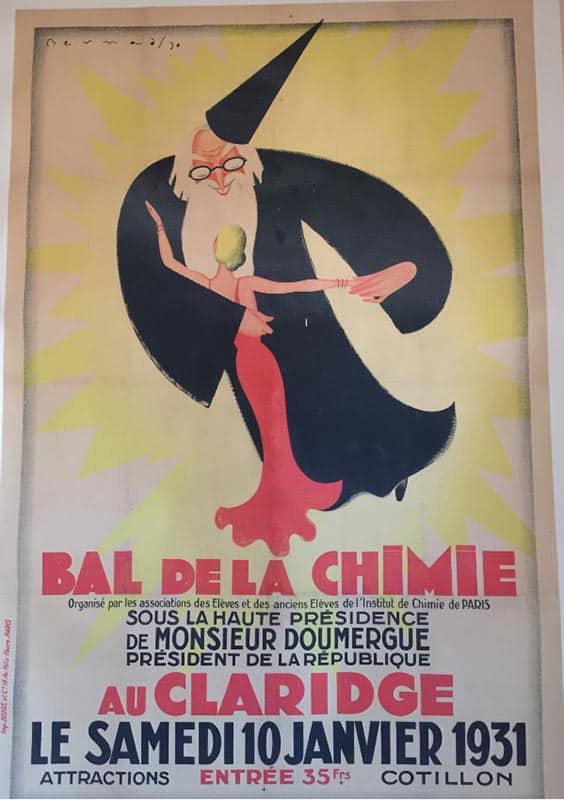
The School becomes the Institute of Chemistry of Paris (ICP). Teaching becomes more diversified, both in the field of chemistry and in the human and social sciences. The school intensifies its relationships with the industry and prioritizes internships and field trips.
The name Institute of Chemistry of Paris (ICP) is officially recognized by the Ministry of National Education in 1945.
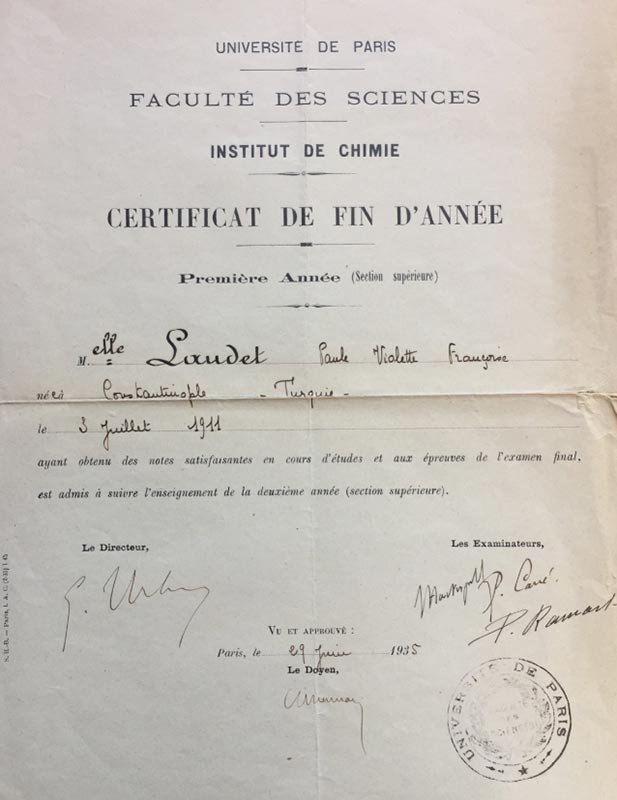
Georges Urbain, Professor of General Chemistry at the Sorbonne, manages the school during this period. Under his leadership, research is flourishing. Research laboratories are created: the electrochemistry laboratory, the applied physical chemistry laboratory and the industrial chemistry laboratory.
A la suite de la création des ENSI (Ecoles Nationales Supérieures d’Ingénieurs) par le décret du 16 janvier 1947, l’ICP devient Ecole Nationale Supérieure de Chimie de Paris par un décret en date du 27 mars 1948. Le régime des études, l’admission des élèves, le personnel de l’école sont régis par le décret de 1947.
Le diplôme d’ingénieur est désormais enregistré et visé par le Ministère de l’Education Nationale.
L’école recrute ses élèves sur un concours particulier dont la préparation, d’une durée d’un an, se fait soit en faculté des sciences, soit dans quelques établissements parisiens d’enseignement secondaire possédant, à côté des autres classes préparatoires aux concours d’entrée dans les grandes écoles, une classe préparatoire à l’ENSCP et à l’ESPCI. A titre d’exemple, on peut citer le collège Chaptal, le collège Lavoisier, le lycée Claude Bernard.
Le nombre de places mises au concours chaque année est fixé par arrêté du Ministre de l’Education Nationale (environ 50).
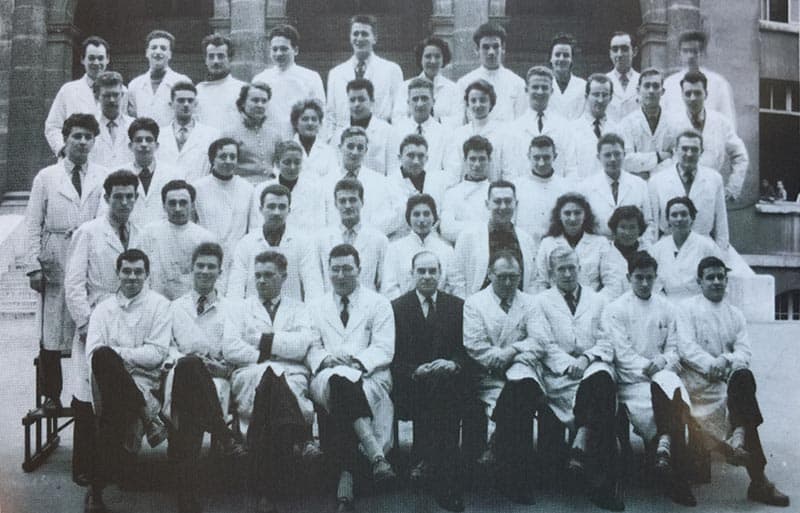
Under the January 26, 1984 law on higher education, the status of the School becomes that of a Public Administrative Institution (PAI) attached to the University Pierre and Marie Curie – Paris VI by a March 14, 1986 decree (Article 43). It then enjoyed a pedagogical, administrative and financial autonomy to better adapt to developments in science and industrial techniques.
In 1999, the National School of Chemistry of Paris became a founding member of ParisTech, which was structured in 2007 into a research and higher education center (PRES) with EPCPST status.
In December 2008, the National School of Chemistry of Paris takes on the brand name “Chimie ParisTech”.
Wishing to consolidate its location in Paris and its network of active collaborations, Chimie ParisTech, along with the ESPCI ParisTech, the Ecole Normale Supérieure, the College of France and the Observatoire, founded the PRES Paris Sciences and Letters – Latin Quarter, in the form of a Foundation for Scientific Cooperation.
This PRES becomes the Paris Sciences and Letters Commission (PSL Commission) in 2012.
In 2015, ENSCP’s status changes to a Scientific, Cultural and Professional Public Establishment (“Etablissement Public à caractère Scientifique, Culturel et Professionnel”, EPSCP) by Decree No. 2015-1286 of October 14, 2015.
The doctorate is awarded by PSL University and prepared by Chimie ParisTech – PSL. Each year, Chimie ParisTech – PSL welcomes around 100 doctoral students to the school’s research teams, spread across its three laboratories.

Opening of the Franco-Chinese Chemistry Institute Beijing, hosted by Beijing University of Chemical Technology (BUCT).
Chimie ParisTech-PSL coordinates the Consortium of French chemical and process engineering schools partnering with Chimie Beijing.
Bachelor’s degree program launched in 2017 and engineering program launched in 2021. In 2026, Chimie Pékin welcomed 468 students, including 396 bachelor’s degree students (4 years), approximately 20% of whom were women, and 72 master’s degree students (3 years), 40% of whom were women.

Chimie ParisTech – PSL confirms its status as a constituent institution of Paris Sciences et Lettres University. That same year, Chimie ParisTech-PSL switches to recruitment via the Concours Commun Mines-Ponts (CCMP) competitive entrance exam.

Chimie ParisTech-PSL joins the European Engineering Learning Innovation and Science Alliance (EELISA).

Chimie ParisTech-PSL celebrates 130 years of research, innovation, and education.
In 2026, Chimie ParisTech -PSL will welcome 547 students, including 382 engineering students (49% of whom are women) and 165 master’s students (one-third of whom are international), as well as 110 doctoral students and 468 students enrolled in Chimie Pékin’s off-campus program, including 396 bachelor’s students (just under 20% of whom are women) (4 years); 72 students, 40% of whom are women, in master’s programs (3 years). Since its creation, Chimie ParisTech-PSL has won a Nobel Prize and seven European Research Council research grants. It is involved in two graduate programs at PSL University and eight major research programs at PSL University, two of which it co-directs.
In 2026, two iconic figures trained at Chimie ParisTech-PSL: Suzanne Veil and Ethel Moustacchi are among the 72 names of female scientists engraved in gold letters on the Eiffel Tower, alongside the male figures already present.
